

Latest
The Sustainable Development Goals in Palestine
The UN and its partners in Palestine are working towards achieving the Sustainable Development Goals: 17 interconnected Goals which address the major development challenges faced by people in Palestine and around the world. These are the goals the UN is working on in Palestine:
Story
04 June 2026
Gaza’s public servants systematically targeted in Israeli strikes
including the enclave’s police force which is crucial to peace and reconstruction efforts, the UN human rights office (OHCHR) said on Wednesday.Outlining “repeated attacks” and “routine targeting” of law enforcement personnel in Gaza, OHCHR said that they have been killed while directing traffic and patrolling streets and crowded markets.This “systematic targeting” of key public institutions and workers has caused a collapse of civic and public order since Hamas-led terror attacks in Israel sparked the war in Gaza on 7 October 2023, maintained Mayy El Sheikh, OHCHR spokesperson in the Occupied Palestinian Territory. Obligations ignored“Israel as the occupying power actually has the obligation under international law to ensure civic and public order for Palestinians who live under the occupation… targeting them, unless they are directly participating in attacks or hostilities, would amount to war crimes,” she insisted.Since January 2026, OHCHR has recorded at least 12 attacks against police, killing more than 53 civilians including 35 police personnel, five boys, and one woman. Four attacks were recorded in May alone, killing 12 police workers.The UN office noted that the pattern of attacks raised concerns that Israeli forces apply “no distinction” between police personnel and fighters belonging to armed groups in Gaza.“Nearly eight months have passed since the announcement of a ceasefire, and there is no end in sight for the killings, the turmoil, and the misery,” said Ajith Sunghay, Head of OHCHR in the Occupied Palestinian Territory.The alleged incidents include:23 May – Israeli strike on a police checkpoint in Al Tawam, Gaza City, killing at least five police officers and two others, including a boy. 24 April 2026 – Israeli drone strike on a police vehicle in Al Mawasi camp, west of Khan Younis, killing four police workers and four civilians, including a boy of nine. 31 January 2026 – Israeli airstrike on Ash Sheikh Radwan Police Station, Gaza City, killing 11 people, including five police officers and a boy.The alert comes as Gaza’s humanitarian catastrophe continues. Today, more than 1.9 million Palestinians of the 2.4 million total living in the enclave have been uprooted by the war, many of them multiple times. At least 1.2 million of them have lost their homes, according to the UN aid coordination office, OCHA.‘Suspended in a nightmare’For many, the notional ceasefire between Hamas fighters and the Israeli military has not brought safety. Displacement orders continue to be issued “and Israeli forces in Gaza continue to destroy whatever is left of the built environment as well”, OHCHR’s Ms. El Sheikh told UN News.“Gaza remains suspended in a nightmare that is difficult to reconcile with the existence of a ceasefire,” she maintained. “Palestinians in Gaza are living on a small fraction of the land, and they are encircled from all sides by Israeli ground forces that continue to push further into Palestinian communities and contract the space that is available to civilians.”
1 of 5
Story
01 June 2026
Gaza: 26 killed over Eid holiday, UN rights investigators report
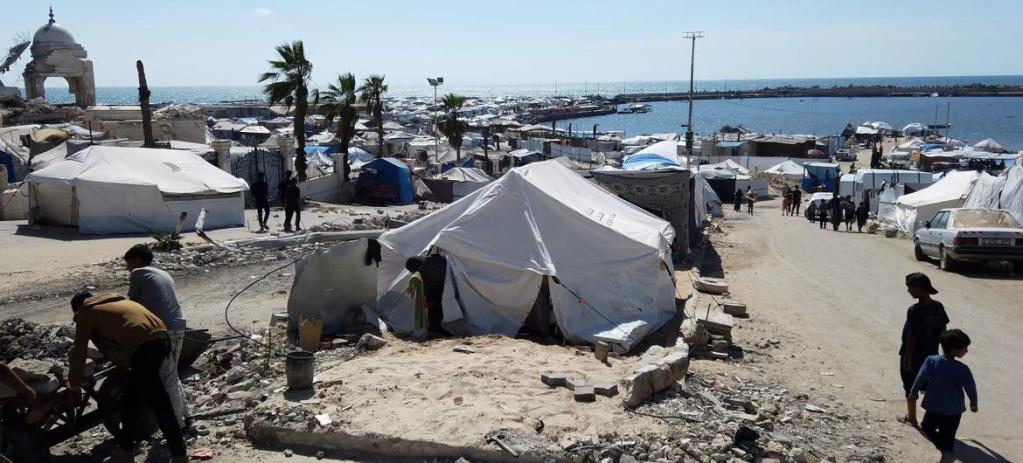
The information was provided by its monitors in the Occupied Palestinian Territory (OPT) who condemned the increase in Israeli attacks as families prepared to observe Eid al-Adha. They said 12 Palestinians were killed in three airstrikes on 26 May, while a teenage girl died of injuries sustained in a strike the previous day that also killed a woman and a young girl, initial reports indicated.One airstrike killed four men in a camp in Middle Gaza, reportedly after they resisted attempts to search their homes by armed gangs allegedly supported by the Israeli military. Two other men were killed when a strike hit a car in Khan Younis.The third airstrike, against an apartment in Gaza City, killed a newly appointed commander of the Hamas Al Qassam Brigades, his wife and three children, as well as a woman passerby.Ten people allegedly affiliated with Al Qassam Brigades were reportedly killed in a strike on 27 May.Death, displacement and deprivation The office noted that Israeli forces have killed 922 Palestinians in attacks since the announcement of the ceasefire in October, bringing the overall death toll since the 7 October 2023 Hamas-led attacks to nearly 73,000, according to local authorities. At least 32 children and eight women have been killed in attacks since the truce. Meanwhile, Palestinians are still being deprived of adequate shelter, essential medicines, food and other necessities as the blockade on Gaza continues, it said. Nearly the entire population remains displaced and concentrated “into a progressively narrower strip of land”, with multiple displacement orders issued in recent days. Dire conditions, ‘unthinkable’ attacks The rights investigators also addressed the announcement on Thursday by Prime Minister Benjamin Netanyahu who has directed Israeli forces to expand their deployment to cover 70 per cent of Gaza’s territory. They said the continued contraction of areas available to civilians raises questions around access to humanitarian assistance and finding safety. Ajith Sunghay, head of the human rights office in the OPT, said its concern over the commission of war crimes in Gaza has not stopped. “It is difficult enough to navigate life in chronic displacement in the ruins of Gaza, under blockade, and after Israeli attacks virtually destroyed every essential system: healthcare, education, food production, law enforcement and civil order,” he said. “Continuing military attacks on a population living under these conditions is unthinkable.” Airstrike near aid facilities Separately, UN aid coordination office OCHA said that an airstrike on Thursday hit a residential area near five humanitarian facilities in Deir al-Balah, central Gaza. No casualties were reported. The development followed an order from the Israeli military to shelter in place shortly before the strike. OCHA continues to call for the opening of more crossings into Gaza for humanitarian aid and commercial supplies to be let in as only one, Kerem Shalom, remains operational. Humanitarian partners provided mental health and psychosocial support, as well as other protection, to more than 10,000 people between 11-17 May. These services – including recreational activities, art and drama sessions, counselling and parenting support – were provided in shelters, camps, schools and displacement sites. “Partners reiterate that to continue these services – particularly for children and adolescents – fuel, safe spaces, staff and other basic resources are needed,” OCHA said.
1 of 5
Story
01 June 2026
Borrowed boots, borrowed joy: Football thrives in Gaza camps
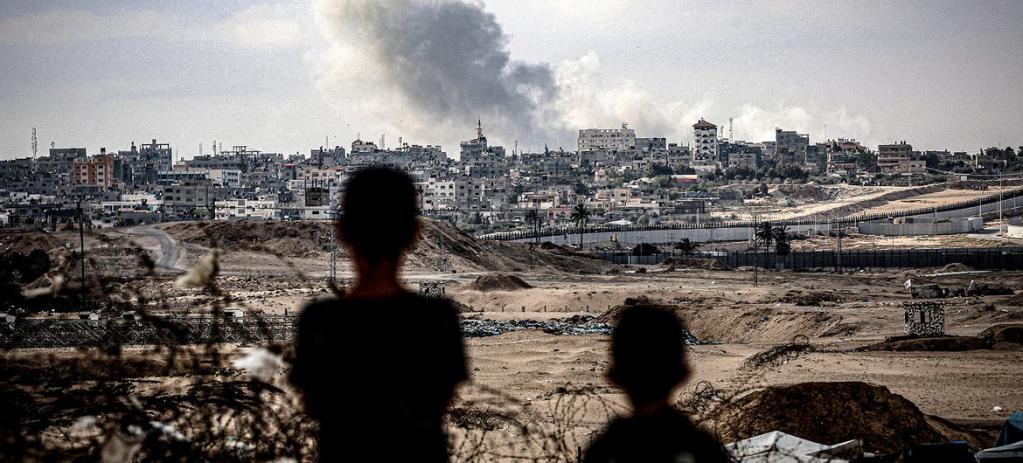
for the thousands living in overcrowded tents, schools or damaged buildings in the shattered Occupied Palestinian Territory of Gaza.In the Al-Mawasi area west of Khan Younis, where tents stretch across the sand and snaking queues form for water and food, Asaad Al-Azzabi prepares for a match a world away from what he once knew.Before the war, Mr. Al-Azzabi played for Al-Tajammu Club in Rafah, where he and his teammates had access to pitches, training halls, coaches and equipment. Borrowed bootsNow, he’s lucky if he can find boots to play in. “Sometimes I borrow a pair from a friend or patch them up with tape,” he says.His home is now a tent in Al-Rahma Camp, a shelter for people displaced from Rafah, where access to clean water and sanitation services is scarce. He lives alone, after his wife left for Jordan with their son, who has cancer, to seek treatment.According to UN data, around 1.7 million people are living in around 1,600 displacement sites across the Gaza Strip, most of them in temporary or informal locations. Most residents rely on water brought in by truck and are forced to cope with restrictions on the entry of equipment, fuel and repair materials.Amid the struggle to meet basic needs, Mr. Al-Azzabi is preparing for the match with nearby Sheikh Al-Eid Camp. He explains the game plan to his players by drawing on the sand, before the team sets off on foot toward a pitch located among the tents of displaced people. The match appears to be more than a sporting activity – it is a respite from the daily hardships of life in the camps. Children and young men gather around the sandy pitch, applauding players, some of whom arrived after spending hours standing in queues for food, water or battery charging.Something out of nothingReferee Alaa Abu Taha, a referee with the Palestinian Football Association and a displaced resident of Rafah, says football has become the “only outlet” for many people in Gaza.“With the most limited resources, we try to play. Now there is no sports infrastructure. The pitch we are standing on now was originally prepared for basketball and volleyball, but our people create everything out of nothing,” he says.Gaza’s sports sector has suffered widespread destruction since the outbreak of the war. According to the Palestinian Football Association, hundreds of athletes have been killed, including many footballers, while hundreds of sports facilities have been damaged or destroyed, including pitches, club headquarters and training halls. In Al-Mawasi these losses have not prevented players from organising a championship between displacement camps. The big matchThe match kicks off in front of a small crowd of displaced spectators, with Mr. Al-Azzabi taking part in boots held together by plastic tape. At the end of the match, Al-Rahma Camp defeats Sheikh Al-Eid Camp 2–1.After the final whistle, young men from the camp lift him and his teammates onto their shoulders, while children and young people celebrate among the tents. For a few brief moments, the sound of displacement recedes from the scene, and football emerges as a rare space for joy.“Under these difficult circumstances, to be able to come out and play a match like this is a very good thing,” says Mr. Al-Azzabi. “Congratulations to our camp. I dedicate this championship to my wife and son in Jordan, and I wish my son a speedy recovery.”For him, the game is more than a sporting victory. It is a message to his distant family and an attempt to preserve what remains of his life as a former player, chasing the ball as if it were the last thing connecting him to who he was before the war.
1 of 5

Story
25 May 2026
Displaced in Gaza: From home comforts to the shattering horror of war
Umm Ahmad sat down to speak to UN News about her life in Gaza before the war and what it has become now. Dire conditions in Gaza marked by continuing violence, rodent infestations and the spread of infectious disease, are being made worse by blockages preventing essential medical supplies from entering the enclave.‘I feel like I’m in prison’ Umm Ahmad lives with her family in a camp in western Gaza City, where she arrived after a journey of displacement that forced the family to move four times – after being displaced from Jabalia in the north.“This tent broke our backs; we can't even stand up in it. I feel like I'm in prison,” she says, entering her flimsy makeshift home.Pointing to a bag of bread hanging at the entrance to the tent, she told our correspondent: “We hang food so that it is away from mice. Mice and rodents sleep among us in the tent. This is more difficult suffering than the war itself.”Water scarcity In a narrow corridor between the tents, Umm Ahmad stands in front of a small counter on which a bowl of soap and water has been placed for washing dishes and cups. Due to scarcity, families rely on storing water manually in plastic containers in quantities that do not meet daily needs.“There is very little water, when it is available we can clean it. The possibilities are limited, as you can see, and the situation is disgusting. This is the life in tents.”UN partners on the ground report that access to water remains a major challenge, with three out of four families relying on truck deliveries. Humanitarian partners are delivering around 24,000 cubic metres of water this way every day through approximately 2,000 distribution points. However, those deliveries depend on generators and machinery that are at risk of breaking down due to shortages of maintenance and repair supplies. Humanitarian organisations continue to stress that essential supplies must urgently be allowed into Gaza to prevent the collapse of critical equipment.Life turned to rubbleSitting on a small plastic barrel, Umm Ahmad recalls the spacious home and the life she once had: "We used to live in a five-storey house equipped with all the necessities of life, with apartments for our children to get married in, but it was destroyed by the war.“We had everything, we were living in luxury and suddenly our lives were turned upside down and we are living in tents. This is our fourth displacement; we have been on the streets for three years now."More than two-and-a-half years after Hamas attacked communities in southern Israel leading to a massive counter-offensive, the cloth tents scattered across Gaza are no longer merely temporary shelters for displaced people, but have become a prolonged daily reality for hundreds of thousands of Palestinians.‘Life of humiliation’Overcome with frustration and sadness, she tells our correspondent: "No matter what I tell you, I can't describe what life is like in tents. In the winter, the tent was flooded with rain every day and the wind blew it. We re-erected it, and we couldn't dry our clothes or mattresses. “In the summer, the suffering is even more severe due to mice, other rodents and insects. It's a life of humiliation; I can't take it anymore.”When our reporter asked her about privacy in the tents, Umm Ahmad said, “There is no privacy. We all crowd together in the tent. Now two of my sons are getting married, we are trying to pitch two tents for them, but the space is not enough. You can't imagine what we're experiencing. Bathrooms and sanitation are another matter.”The health situation in the enclave is devastating. 22 attacks on healthcare have been reported in Gaza this year and barely half of the hospitals are partially functional, while not a single hospital can be considered fully operational.Umm Ahmad smiled only when her two grandchildren approached her and she began to comfort them. Where once there was space and plenty, life in the camp is a constant struggle to secure even the most basic necessities.
1 of 5

Story
21 April 2026
Gaza: Human development set back 77 years as recovery costs rise to $71 billion
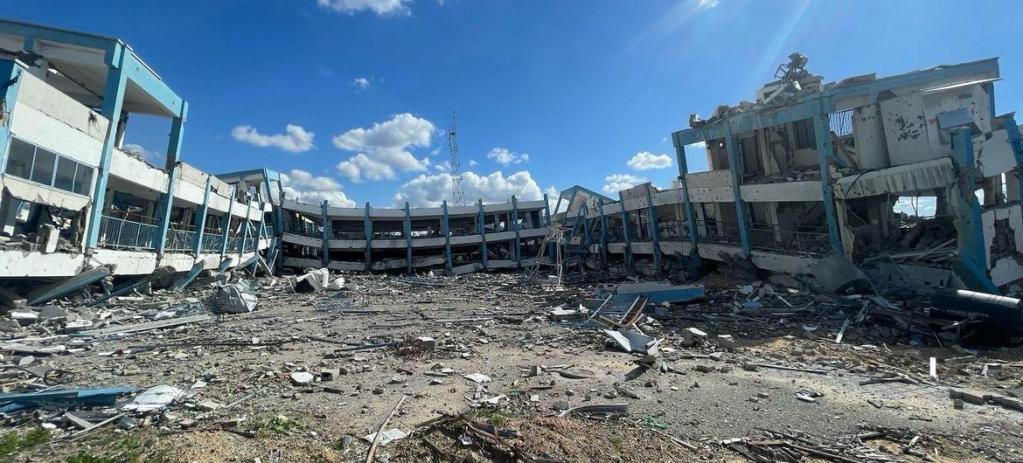
with $71.4 billion needed over the next decade for recovery and reconstruction.That’s according to the final Gaza Rapid Damage and Needs Assessment (RDNA), jointly conducted with the UN-partnered World Bank.The assessment says $26.3 billion will be needed in the first 18 months to restore essential services, rebuild critical infrastructure and support economic recovery.Since full-scale war erupted in Gaza following the Hamas-led attacks on southern Israel in October 2023, the physical damage in the Strip is estimated at $35.2 billion, with a further $22.7 billion in economic and social losses.Entire sectors have been devastated, including housing, health, education, commerce, and agriculture. Over 371,888 housing units have been destroyed or damaged, more than 50 per cent of hospitals are non-functional, and nearly all schools have been destroyed or damaged. The economy has contracted by 84 per cent.Devastating human toll The impact on the lives of Gazans is just as devastating: more than 60 per cent of the population having lost their homes and 1.9 million people displaced, often multiple times. Women, children, persons with disabilities, and those with pre-existing vulnerabilities bear the greatest burden.Over two years of conflict has resulted in more than 71,000 Palestinian fatalities and over 171,000 injured, according to local authorities, with many still missing under the rubble. Framework for reconstructionThe report provides the foundation for early recovery planning and reconstruction, stressing it must must run in parallel with humanitarian action to ensure an effective transition from emergency relief toward reconstruction at scale in both the Gaza Strip and West Bank.The assessment is framed in line with Security Council adopted resolution 2803 (2025) of the US-backed Comprehensive Plan to End the Gaza Conflict, which welcomed establishment of the Board of Peace led by President Trump as a transitional administration to set the framework for redevelopment and authorised the mechanism to set up a temporary International Stabilisation Force (ISF). The EU and UN emphasise that recovery and reconstruction should be Palestinian-led and should support the transition of governance to the Palestinian Authority, while advancing a durable political settlement based on the two-State solution.Planning and implementation should be inclusive, transparent, and accountable, with particular attention to the needs of women, children, elderly, and persons with disabilities.Conditions neededThe assessment recognises that a set of enabling conditions are essential for recovery, reconstruction, and implementation of the broader political framework:A sustained ceasefire and adequate securityUnimpeded humanitarian access and immediate restoration of essential servicesFree movement of people, goods, and reconstruction materials, within and between Gaza and the West Bank, and a functional, transparent financial systemClear, accountable governance, including defined mandates and establishment of conditions for the transitional administrative bodies in coordination with the Palestinian Authority (PA)A credible pathway for the PA’s future governance across the entire Occupied Palestinian territory, including Gaza, the West Bank and East Jerusalem, is essentialDebris clearance, explosive ordnance management, and resolution of housing, land, and property rights are prerequisites for reconstruction.The international community must mobilise resources in a targeted, sequenced, coordinated mannerAll obstacles to the deployment of expertise and equipment must be removed rapidly
1 of 5
Story
22 May 2026
Gaza risks ‘permanent’ state of limbo if transition plan stalls, Security Council hears
As Gaza’s fragile ceasefire frays and humanitarian conditions deteriorate, a senior UN envoy warned the Security Council on Thursday that delays in implementing the Council-backed transition plan for the enclave will only increase suffering and undermine recovery.Ramiz Alakbarov, UN Deputy Special Coordinator for the Middle East Peace Process, said the situation across the Occupied Palestinian Territory was becoming “increasingly precarious”, with mounting violence in both Gaza and the West Bank.“In Gaza, delays in the implementation of resolution 2803, alongside daily violence and a continuing humanitarian crisis, have replaced the early momentum following the ceasefire,” he said.The resolution adopted last November endorsed the US peace plan to end the conflict, authorising the Board of Peace transitional authority and backing an International Stabilization Force, paving the way for Israeli withdrawal.Read more about the resolution here.While negotiations on the next phase of the October ceasefire continue, Mr. Alakbarov warned against any return to full-scale fighting.“The people of Gaza cannot take more war,” he said. “This scenario must be avoided at all costs.”Dire needs continueHumanitarian conditions in Gaza remain severe. Nearly a million people across the enclave still need urgent shelter assistance, while most of the population remains displaced. Major funding and operational constraints still frustrate the aid effort, including delays at checkpoints, damaged roads and restrictions on critical supplies entering the territory.The UN-coordinated 2026 Flash Appeal, which seeks more than $4 billion to support nearly three million people across Gaza and the West Bank, is only around 13 per cent funded.‘No recovery’ yetNickolay Mladenov, the Board’s High Representative for Gaza – and Special Coordinator for the UN in the region until the end of 2020 – told ambassadors that while the ceasefire had significantly reduced violence and improved aid access, “there is no recovery” yet in Gaza.“Around 80 per cent of the buildings in Gaza are damaged or destroyed,” he said. “More than a million people have no permanent shelter. They are living, this morning, in tents and in the broken shells of buildings.”Plan based on ‘reciprocity’He said the proposed roadmap for implementing the transition plan was based on “reciprocity” – with each step by one side triggering obligations by the other – and stressed that Hamas and all armed groups must eventually be disarmed under Palestinian authority.“No Palestinian armed group will be required to transfer weapons to Israel,” he said. “They pass to the NCAG,” referring to the proposed National Committee for the Administration of Gaza.The roadmap also envisions a phased Israeli withdrawal tied to verified progress on decommissioning weapons and deployment of the stabilization force.Mr. Mladenov warned that failure to move forward risked entrenching a divided and devastated Gaza.“The risk is that the deteriorating status quo becomes permanent,” he said. “Another generation of children growing up in tents, in fear, with despair as the most rational thing for them to feel.”Attacks and West Bank land grabs intensify Alongside the crisis in Gaza, Mr. Alakbarov warned of worsening violence and settlement expansion in the occupied West Bank, including East Jerusalem.He said Israeli planning authorities had recently advanced plans for more than 2,200 new settlement housing units, while attacks by settlers against Palestinian communities had intensified sharply this year.“Some 220 Palestinian communities have faced attacks,” he said, adding that the violence was increasingly displacing entire communities.The envoy also noted the recent Israeli government plans concerning the UNRWA compound in Sheikh Jarrah in East Jerusalem, following an earlier seizure of the site.“The Secretary-General strongly condemned this decision,” he said.Ceasefire ‘yet to bring safety’The Council also heard an account from Rami Hijjo of the Palestine Red Crescent Society, who described the daily struggle for survival inside Gaza amid continued bombardment, displacement and severe shortages.“I stand before you today as a civilian and a humanitarian worker who lives in Gaza,” he said. “The ceasefire has yet to bring safety.”Mr. Hijjo described repeated displacement, collapsing health services and mounting risks faced by humanitarian workers, including the killing of Palestinian Red Crescent medics earlier this year.“No amount of creativity can fully overcome the occupational, systematic and deliberate restrictions designed to make life unbearable for all civilians and all those trying to help them,” he told ambassadors.A crucial opportunityDespite the bleak assessments, Mr. Alakbarov insisted the current ceasefire framework still represented the best opportunity to prevent renewed large-scale war and begin rebuilding Gaza.He warned that without urgent progress on making resolution 2803 a reality, the situation would only grow more dire. He called for “collective responsibility” to prevail with Israeli and Palestinian leaders returning to the path of a two-State solution.
1 of 5

Story
21 May 2026
Guterres condemns Israeli move to militarise seized compound in occupied East Jerusalem
UN Secretary-General António Guterres strongly condemned Israel’s decision to establish military facilities at a seized UNRWA compound in occupied East Jerusalem, calling the move “wholly unacceptable”.In a statement issued by his spokesperson, the Secretary-General said the decision to use the Sheikh Jarrah compound of the UN agency assisting Palestine refugees for military purposes represented “a breach of the inviolability of United Nations premises” and undermined the agency’s mandate in the occupied Palestinian territory.“The Secretary-General condemns in the strongest terms the Israeli authorities’ decision to establish military facilities at the UNRWA Sheikh Jarrah compound in East Jerusalem,” seized in January, the statement said.“Such actions, as affirmed by the International Court of Justice (ICJ), are unlawful. The State of Israel is not entitled to exercise sovereign powers in any part of the occupied Palestinian territory and is under an obligation to bring to an end its unlawful presence...as rapidly as possible.”Mr. Guterres also stressed that “UNRWA is an integral part of the United Nations” and that the compound “remains United Nations premises.”The Secretary-General urged Israel to immediately reverse course and hand the compound back to the UN.Situation in GazaMeanwhile in Gaza, the UN relief coordination office OCHA warned that continued Israeli strikes were hitting residential areas and makeshift shelters housing displaced families.On Monday, an airstrike struck Jabalya Camp in northern Gaza, damaging tents and tarpaulins sheltering around 30 families. Humanitarian teams are assessing needs and working to provide emergency assistance.“We reiterate that civilians and civilian facilities must be protected at all times,” UN Spokesperson Stéphane Dujarric told reporters at the regular noon briefing in New York.Access challengesAid agencies also reported persistent obstacles to humanitarian movements in areas where Israeli authorities require prior coordination.According to OCHA, one humanitarian convoy was delayed for about an hour at an Israeli holding point, while another mission transporting refrigerated supplies had to be cancelled due to delays reaching the Kerem Shalom crossing.A separate mission was abandoned after the designated route was found impassable.“These constraints have made it challenging for aid groups to provide assistance and essential supplies to people,” Mr. Dujarric said.Aid effortsDespite the challenges, humanitarian partners continue to scale up assistance.The UN Development Programme (UNDP) has brought around 2,500 more durable temporary housing units into Gaza since January, with more than half already installed for use as homes, clinics and classrooms.The UN estimates that some 900,000 people across Gaza urgently require shelter assistance and durable housing solutions.Agencies and partners are also supporting the daily production of around 130,000 bread bundles distributed for free through shelters and community centres and sold at subsidized prices at some 170 shops across the enclave.
1 of 5

Story
19 May 2026
Palestine: Killings, destruction and settler encroachment continues
while forced displacement in the occupied West Bank has reached a rate “unseen in decades”, a senior official with the UN human rights office, OHCHR, said on Monday in Geneva.Ajith Sunghay, Head of UN Human Rights in the Occupied Palestinian Territory (OPT), launched its latest report which covers the period between 7 October 2023 and 31 May 2025 following Hamas-led attacks on Israel and Israel’s subsequent assault on Gaza.It documents large-scale violations of international law, including atrocity crimes, and points to war crimes and possible crimes against humanity committed by Israeli and Palestinian parties.Lasting consequences“One year later, despite the ceasefire concluded in October 2025, the lasting consequences of the patterns we documented are apparent,” said Mr. Sunghay.“The ceasefire diminished the immense scale of violence up that point and opened some modest humanitarian space. But killings and the destruction of infrastructure have continued on an almost daily basis, and the overall humanitarian situation remains dire. All while Hamas continues its own violations, including against the people of Gaza.”The reporting period saw unprecedented levels of killings of Palestinians by Israeli forces, the tightening and escalation of Israeli control over Palestinians and their land, and “concerning conduct” by Palestinian authorities and armed groups such as indiscriminate rocket fire against Israel and the taking of hostages.Deadly attacks, devastating violencePalestinian armed groups committed war crimes and possible crimes against humanity when they attacked civilians in Israel on and after 7 October 2023, killed at least 1,124 people, seized hostages and fired thousands of unguided missiles into Israeli territory for over a year.“Released hostages have provided credible accounts of torture and ill-treatment, including sexual violence,” said Mr. Sunghay.Meanwhile, “Israel unleashed devastating violence and dispossession in Gaza and the West Bank, committing war crimes and possible crimes against humanity,” he said.He noted that the report found that the totality of Israeli conduct in Gaza raises serious concern about the country’s compliance with its obligation to prevent acts within the scope of the Convention on the Prevention and Punishment of the Crime of Genocide. Blockade, starvation and displacement“The fact remains that Palestinians have no means to ensure their survival or to protect their loved ones, with hundreds killed since the announcement of a ceasefire,” Mr. Sunghay said.“The Israeli military has killed 72,769 Palestinians since 7 October 2023 in Gaza: in their homes, in IDP shelters, in hospitals, in schools, in places of worship, on the streets, while queuing for aid, while trying to fish in the sea.”Moreover, “the Israeli blockade on Gaza resulted in starvation and famine that was foretold and later confirmed,” and hundreds died. He stressed that “any use of starvation as a method of war against civilians is a war crime, and it may amount to a crime against humanity and even genocide in certain conditions.”Mr. Sunghay also addressed displacement in Gaza which has raised concerns about ethnic cleansing and forcible transfer. People have fled neighbourhoods which are now gone “as Israeli forces continue to unlawfully demolish buildings across Gaza – homes still laden with thousands of unretrieved Palestinian bodies.”‘Unprecedented’ settlement expansionRegarding the West Bank, he said that the rate of forcible displacement “is unseen in decades”, describing Israeli settlement expansion there as “unprecedented”.“Israeli military and police forces and settlers are killing more and more Palestinians with impunity, often together,” he added. Since the 7 October attacks, they have killed 1,096 Palestinians, with children making up around 20 per cent, or one in five.“Settler attacks are routinely carried out with the support, acquiescence, or participation of Israeli security forces,” he said.“The Israeli Government has intensified the militarisation of the settler movement, shielded them from accountability, and now actively benefits from settler violence as a catalyst for its stated annexation agenda.”Mr. Sunghay said the dispossession in the West Bank is “matched in intensity with the record rate of settlement expansion” which has increased by 80 per cent since the Government took office, with 102 new settlements added to the 127 that existed previously. Unable to return homeFurthermore, 33,000 Palestinians displaced from three refugee camps last year – Jenin, Tulkarem, and Nur Shams – are still unable to return to their homes. “Israeli authorities are forcing Palestinians out of their homes around the Old City in East Jerusalem at alarming levels, turning their properties over to settlers, or making room for settlement projects including a park and a cable car project,” he said.The report also documented other patterns that have persisted, including the torture and ill-treatment of Palestinian detainees in Israeli custody, which includes sexual violence and even rape, denial of sufficient food and medical care.“Discriminatory practices have further reinforced Israel’s violation of the prohibition of apartheid and racial segregation,” he said.‘Impunity fuels recurrence’He noted that overall, not enough is being done to stop these violations.“The ceasefire has not led to any forms of meaningful accountability for the violations committed in the preceding years. Nor has it led to any fundamental reckoning with the underlying driver – the protracted occupation,” he said.“Impunity fuels recurrence. Most of the horrors documented here, and those documented for decades before, have gone unpunished, with no prospect of justice for the victims.”Mr. Sunghay stressed that in addition to expressing condemnation, countries must urgently take every measure in line with international law to end the Israeli occupation, ensure the dismantlement of existing settlements, protect civilians, achieve accountability for serious violations by all parties, and ensure Palestinians are able to exercise their human rights.“In a context like this, lack of action is not passivity. It is a license,” he said.
1 of 5
Story
13 May 2026
Children shot, stabbed and pepper-sprayed in occupied West Bank
while in Gaza tens of thousands with life-changing injuries lack access to treatment and rehabilitation, UN agencies warned on Tuesday.“We're seeing attacks become increasingly coordinated,” UN Children’s Fund (UNICEF) spokesperson James Elder told reporters in Geneva. “Documented incidents include children shot, stabbed, children beaten, and children pepper-sprayed.”Some 70 children have been killed since January 2025 – at least one on average every week – and a further 850 injured, mostly by live ammunition, UNICEF says.“All this comes amid historic levels of settler attacks,” Mr. Elder continued, explaining that March 2026 saw the highest number of Palestinians injured by settler attacks in the last 20 years.Bludgeoned by attackersFollowing a recent West Bank visit, the UNICEF spokesperson described meeting an eight-year-old who had been beaten with a piece of wood in a settler attack and hospitalized for head injuries.The boy’s mother “had both her arms broken when she reached across to protect her four-month-old baby, putting therefore her arms between her baby and the attacker's club”.Mr. Elder also highlighted the prevalence of education-related attacks, including the killing, injury and detention of students, as well as the demolition of schools.“Schools, which should be places of safety and stability, are increasingly becoming places of panic,” he stressed.“I walked with schoolchildren through the West Bank so as to try and help them avoid any attacks,” the UNICEF spokesperson recounted. “It's interesting to watch them walk...They don't walk in a straight line because they're constantly looking over their shoulder.”“This is a walk to school. It's become a walk through fear,” he insisted.Record detention numbersMr. Elder also reported on a “sharp rise” in the arrest and the detention of Palestinian children from the occupied territory, saying that 347 of them are being held in Israeli military detention “for alleged security-related offences” – the highest number in eight years.“Alarmingly, more than half of these children, 180, are held under administrative detention and without the procedural safeguards, including detention without regular access to legal counsel and the right to challenge detention,” he said.Gaza children killed and maimedMeanwhile in Gaza, Mr. Elder said that since the October 2025 ceasefire, the UN has documented at least 229 children killed and 260 injured.Dr Reinhilde Van de Weerdt, the UN World Health Organization (WHO)’s representative in the Occupied Palestinian Territories, told reporters that some 10,000 children in the devastated Strip live with life-changing injuries.Overall, an estimated 43,000 of the 172,000 people injured in Gaza since October 2023 have sustained such trauma, affecting limbs, the spinal cord or brain. Almost 2,500 people have been injured since the October 2025 ceasefire.“Of the 2,277 people that have had a limb amputated, less than 25 per cent have been fitted with permanent prosthetics,” Dr Van de Weerdt said, due to a severe shortage of prosthetics in Gaza.Amputees denied prosthetic limbsSpeaking from Jerusalem, the WHO representative explained that no less than 18 shipments of rehabilitation-related supplies such as wheelchairs or prosthetic limbs are pending clearance to enter Gaza, with waiting times ranging from 130 days to more than a year.In total, more than 50,000 conflict-related injuries require long-term rehabilitation; no rehabilitation facilities are functional in the enclave.“Every day that rehabilitation services in Gaza remain under-resourced is a day that preventable disability risks become permanent,” she concluded.
1 of 5
Story
27 April 2026
More than 70,000 cases of ectoparasitic infestations, as shortages of hygiene supplies exacerbate challenges
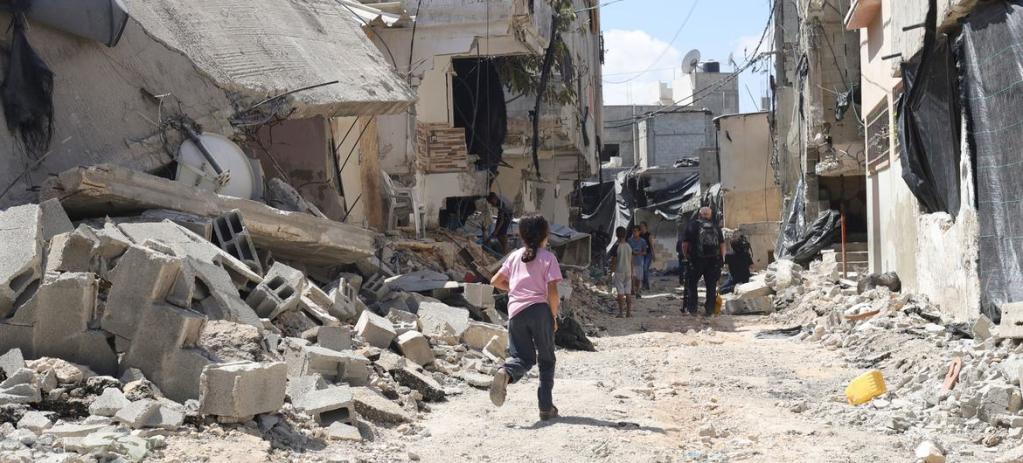
The situation remains precarious in Gaza, meanwhile, with more than 1,800 health facilities partially or completely destroyed, according to the UN World Health Organization (WHO). “It ranges from big hospitals like Al Shifa in Gaza City to smaller primary health care centres, clinics, pharmacies and laboratories,” said the agency’s new representative in the Occupied Palestinian Territories, Dr Reinhilde Van de Weerdt.Speaking from Jerusalem, Dr Van de Weerdt reported on her first visit to Gaza as the new WHO representative.“I just spent my first week in Gaza earlier this month. And really nothing prepares you for the scale of the destruction. You can read the reports, study the numbers, but standing in the street in the middle of endless metres-high piles of rubble is something else entirely.”Tents, rubble and ratsAcross Gaza, most Palestinian families remain displaced, the veteran humanitarian noted. “They live in tents amidst the rubble, dependent on humanitarian assistance for the most basic of their needs. And despite the ceasefire, airstrikes, shelling and gunfire continued.”In addition to those dangers, more than 70,000 cases of ectoparasitic infestations have been reported so far in 2026 and more than 80 per cent of displacement sites report rodents or pests frequently visible, along with skin infections, such as scabies, lice and bed bugs- “the unfortunate but predictable consequence when people live in a collapsed living environment”, the WHO official said.“For WHO and the health partners, we need to have a better understanding on the diseases that are affecting the people in Gaza. We therefore need laboratory equipment and supplies to enter Gaza. As many of you know, this equipment and supplies do not enter Gaza, which leaves us blind.”To address this growing health threat “things need to change”, Dr Van de Weerdt insisted. “Health and healthcare workers need to be protected; essential medicines and supplies must enter Gaza. Bureaucratic processes and access restrictions on these globally recognised essential medicines and supplies must be removed.”‘Dynamic threat’Echoing that message, the head of the UN Mine Action Service (UNMAS) in the Occupied Palestinian Territory underscored the ever-present danger from unexploded ordnance across the shattered enclave.The lethal threat is now “essentially ingrained or embedded in the debris at this point in time,” said Julius Dirk Van Der Walt, Chief of UNMAS, in the OPT.“We've barely scratched the surface in understanding what is the level of contamination that we will be encountering in Gaza,” he continued. “What we do know is that this will be a dynamic threat…you will have families returning to their homes; a father would maybe walk into the house, find a hand grenade, wanting to move it away from his children.”
1 of 5

Press Release
25 May 2026
OHCHR oPt: Israel must halt forcible displacement of Khan Al Ahmar and settlement expansion in E1
Situated east of Jerusalem, Khan Al Ahmar is a Bedouin community and home to hundreds of Palestinians. On Tuesday, 19 May, the Israeli Minister of Finance and Additional Minister within the Ministry of Defence, Bezalel Smotrich, directed the Israeli Civil Administration to evict the Khan Al Ahmar community “as soon as possible”. This order puts the community at imminent risk of forcible transfer — a war crime.Last year, Israeli authorities approved plans for 3,401 settlement units in the E1 area that would connect the Israeli settlement of Maaleh Adumim to occupied East Jerusalem. The planned construction would replace 18 Palestinian communities, including Khan Al Ahmar, with Israeli settlers. It would further disrupt the territorial continuity of the occupied West Bank, consolidate Israeli annexation, and severely impair a viable, contiguous Palestinian state. Statements by Israeli officials link the settlement project in the E1 area to the thwarting of Palestinian statehood. This includes, in September 2025, the Israeli Prime Minister telling the press during a ceremony related to the E1 settlement project: “There will be no Palestinian state. This place is ours.”The families of Khan Al Ahmar are mostly refugees, originally displaced from areas inside present-day Israel. For nearly two decades, Israeli authorities have consistently denied the community building permits and then issued orders to demolish their homes on the basis of the absence of such permits. Members of the community have spent years challenging the demolition orders in Israeli courts. Sustained international advocacy efforts have thus far prevented the community’s forcible transfer.“There is no legal ambiguity about this: Israel’s forcible transfer of Palestinians is unlawful; settlements are unlawful; and Israel must cease all settlement activities, evacuate all settlements, and end its unlawful presence in the Palestinian territory in line with the conclusions of the International Court of Justice,” said Ajith Sunghay, Head of UN Human Rights in the Occupied Palestinian Territory.“Instead, Israel is engaged in what appears to be relentless ethnic cleansing of Palestinians, and an unprecedented expansion of its settlement enterprise. If Israel continues to be allowed to alter facts on the ground with impunity, there will soon be nothing left to salvage.”
1 of 5
Press Release
24 April 2026
Child and man killed near school in Al Mughayyir as settler militarisation intensifies
In Deir Dibwan, settlers entered the village and clashed with residents with an armed settler shooting and killing 25-year-old Odeh Awawdeh. Israeli security forces raided the town and closed its entrances during the incident, detaining 30 Palestinian men who were later released. According to Israeli media reports, Israeli security forces also held several settlers for questioning following the incident.Settlers also attacked Al Mughayyir around noon on Tuesday and opened fire towards the boys’ school west of the village. Residents of Al Mughayyir circulated a video showing the shooting of the child while sheltering with others just outside his school as gunshots are heard from a distance. Eyewitnesses told OHCHR OPT that one of two armed settlers in partial uniform was shooting at the school, with four masked members of Israeli security forces in full uniform present at the scene.The Israeli military issued a statement claiming that the incident occurred when a car carrying “civilians including a reservist soldier” stopped when stones were allegedly hurled. The statement said the reservist exited the vehicle and shot at suspects. According to Israeli media, the reservist was later suspended and an investigation was initiated. At least nine Palestinians have been killed since the beginning of 2026 by settlers later identified by the Israeli military as reservist soldiers.This convergence of settler and soldier is the result of measures taken by the Israeli authorities to intensify the militarisation of the settler movement since 7 October 2023, including the enlistment and arming of thousands of settlers as reservists in regional battalions known as Hagmar. These measures also include arming and empowering settlements’ emergency response squads known as Kitat Konenut, and the relaxation of gun licensing requirements for Israelis, including settlers.Across the West Bank, Palestinians are reporting attacks by men who are clearly known to them as settlers, but who are dressed in full or partial military uniform and are often carrying state-issued assault rifles and military gear. Palestinian survivors of such attacks describe their attackers as “settlers in uniform.”Settler attacks on Palestinian communities are often carried out with the active support and participation of uniformed Israeli security forces, even when there is no ambiguity that the perpetrators are settlers.Since 7 October 2023, 1,088 Palestinians have been killed by Israeli security forces and settlers in the occupied West Bank, including 238 children. This includes 34 by settlers, 1,040 by Israeli security forces, and 14 Palestinians whose killings cannot be definitively attributed because Israeli security forces and settlers were attacking and shooting together.No Israeli soldier has served a single day in prison for killing a Palestinian in the occupied West Bank since at least 2017. The only recorded conviction was in 2020 for which the sentence was three months of military service and three months of suspended jail time.Settlers’ impunity is equally systematic. According to the Israeli human rights organisation Yesh Din, 93.6% of all investigations of settler violence in the occupied West Bank between 2005 and 2025 were closed without indictments, and only 3% led to partial or full convictions with lenient sentences.“Israeli policies have erased whatever line that ever existed between settler and state violence. And the systematic impunity for killing Palestinians is the backbone of this non-stop horror,” said Ajith Sunghay, head of OHCHR OPT. “The international community must insist on meaningful accountability for the perpetrators of all unlawful killings in the Occupied Palestinian Territory to stop the bloodshed.”
1 of 5
Press Release
20 April 2026
Final Gaza Rapid Damage and Needs Assessment estimates $71.4 billion for recovery and reconstruction
According to the assessment, recovery and reconstruction needs in Gaza are estimated at $ 71.4 billion over the next decade, including $ 26.3 billion required in the first eighteen months to restore essential services, rebuild critical infrastructure, and support economic recovery. Physical infrastructure damages are estimated at $ 35.2 billion, with economic and social losses amounting to $ 22.7 billion. The report finds that the hardest-hit sectors include housing, health, education, commerce, and agriculture. Over 371,888 housing units have been destroyed or damaged, more than 50 % of hospitals are non-functional, nearly all schools destroyed or damaged, and the economy has contracted by 84% in Gaza.The report highlights catastrophic impact on human development across Gaza, which is estimated to have been set back by 77 years. Around 1.9 million people have been displaced, often multiple times, and more than 60% of the population has lost their homes. The report also notes that women, children, persons with disabilities, and those with pre-existing vulnerabilities bear the greatest burden.The RDNA provides the analytical foundation for early recovery planning and reconstruction, in line with UN Security Council resolutions, including UNSCR 2803. Given the immense scale of need, recovery efforts must run in parallel with humanitarian action, ensuring an effective and well-sequenced transition from emergency relief toward reconstruction at scale — one that encompasses both the Gaza Strip and West Bank.The European Union and the United Nations emphasise that recovery and reconstruction should be Palestinian-led and incorporate building-back-better and building-forward-better approaches that actively support the transition of governance to the Palestinian Authority in line with UNSCR 2803 and the Comprehensive Plan, as well as advance a durable political settlement based on the two-state solution. Planning and implementation should be inclusive, transparent, and accountable, and should pay particular attention to the needs of women, children, elderly, and persons with disabilities. The European Union and the United Nations equally recognise that a set of enabling conditions must be met for UNSCR 2803 to be implemented effectively on the ground. Without them, neither recovery nor reconstruction can succeed. A sustained ceasefire and adequate security are minimum conditions. Unimpeded humanitarian access and immediate restoration of essential services must underpin recovery. Free movement of people, goods, and reconstruction materials, within and between Gaza and the West Bank, and a functional, transparent financial system are critical. Clear, accountable governance, including the definition of mandates and establishment of conditions for the transitional administrative bodies under UNSCR 2803 to fulfill their role, in coordination with the Palestinian Authority, and a credible pathway for the Palestinian Authority’s future governance across the entire Occupied Palestinian territory, including Gaza, the West Bank and East Jerusalem, is essential. Debris clearance, explosive ordnance management, and protection of housing, land, and property rights are prerequisites for reconstruction. The international community must mobilise resources in a targeted, sequenced, coordinated manner and all obstacles to the deployment of expertise and equipment must be removed rapidly.The European Union and the United Nations are unequivocal that progress on Gaza’s recovery and reconstruction, the implementation of UNSCR 2803, and the realisation of a two-state solution are not parallel tracks, but inherently interconnected. The European Union and the United Nations underline that UNSCR 2803 cannot be implemented and the Comprehensive Plan cannot fully succeed without both: the physical and institutional rebuilding of Gaza, and a clear pathway to Palestinian statehood across the occupied Palestinian territory. Palestinians deserve a future grounded in dignity and the fulfillment of their right to self-determination. The international community must rise to that responsibility — and the European Union and the United Nations commit to doing so, in support of the Palestinian people and of a just and lasting peace in the region. Alexandre Stutzmann Ramiz AlakbarovHead of Delegation Deputy Special Coordinator forEuropean Union Representative the Middle East Peace Process,to the West Bank and Gaza Strip UN Resident Coordinator, and Humanitarian Coordinator
1 of 5
Press Release
02 April 2026
Sawasya JP through UN Women launches a new study on the economic cost of violence against women in Palestine
The study provides the first comprehensive national analysis of the economic impact of violence against women in Palestine, demonstrating that gender-based violence is not only a grave violation of human rights but also places a significant economic burden on individuals, families, institutions and the national economy.According to the study, the overall annual economic cost of violence against women in Palestine is estimated at approximately NIS 297.45 million (USD 86.47 million). This includes costs borne by individuals and households, as well as the cost of inaction, such as lost productivity, unpaid care work and out-of-pocket expenditure. It also includes costs incurred by institutions and service providers responding to violence and delivering services.The findings highlight that violence against women has impacts beyond the immediate harm experienced by survivors. The economic burden includes lost income, reduced productivity, increased health and legal costs, and significant unpaid care work, all of which affect households, communities and the broader economy. The research also underscores the scale of violence experienced by women. Data from the 2019 Palestinian Central Bureau of Statistics survey indicates that indicates that many women experience various forms of violence, including psychological, physical, sexual and economic violence within and outside the household. By translating these impacts into economic terms, the study provides critical evidence to support policy reform, strengthen prevention efforts, and guide investment in services for survivors.Produced by UN Women under the Sawasya III Joint Programme, a joint initiative implemented with United Nations Development Programme and UNICEF, the study provides evidence-based insights to inform policies, programmes and budgeting processes aimed at preventing violence against women and strengthening survivor-centred services.“This study demonstrates that violence against women carries profound economic consequences for families, communities and institutions. By quantifying these costs, we hope to strengthen evidence-based policymaking and support national efforts to invest in prevention, protection and access to justice for women and girls. Through the Sawasya programme, we remain committed to supporting institutions and partners in translating this evidence into concrete reforms and stronger services for survivors.” Hanan Kamar, Rule of Law and Protection Specialist at UN Women, Sawasya III Joint ProgrammeThrough the Sawasya programme, the findings of this study will contribute to strengthening policy dialogue and national reform efforts to improve laws, policies, and institutional responses to gender-based violence.The evidence will support decision-makers, including legislators, government counterparts, justice sector actors, and service providers—in advancing evidence-based reforms, particularly in relation to the Family Protection Bill, and in shaping more responsive legal and policy frameworks.It will also enhance understanding of the broader social and economic impacts of violence against women, informing more effective planning, resource allocation, and survivor-centred prevention and response services.By highlighting the significant economic costs of violence, the study also provides a strong evidence base to advocate for sustained investment in prevention, protection and access to justice, reinforcing that addressing violence against women is not only a human rights obligation but also a critical social and economic priority.Speaking during the event, representatives emphasized that investing in prevention, protection and access to justice is essential not only to safeguard women’s rights but also to strengthen social and economic resilience in Palestine.The launch took place during the online closing event of the International Women’s Day campaign “We Survive, We Lead,” which highlights the leadership and resilience of Palestinian women across communities and institutions. The campaign underscores that Palestinian women continue to sustain essential services, mobilize support networks and advocate for dignity, justice and equal rights despite ongoing challenges.The event also featured high-level participation, including Dr. Ramiz Alakbarov, Deputy Special Coordinator, Resident and Humanitarian Coordinator, and H.E Mona Al Khalili, the Minister of Women’s Affairs, as well as H.E Ambassador Tarja Kangaskorte, Representative Office of Finland. It also featured representatives from United Nations agencies, government institutions, diplomatic missions and women-led organizations to reflect on progress and renew commitments to advancing gender equality and ending violence against women.By shedding light on the economic dimensions of violence against women, the study aims to support policymakers, institutions and civil society in strengthening coordinated responses, improving service provision and investing in prevention strategies that protect the rights and wellbeing of women and girls across Palestine.
1 of 5
Press Release
27 March 2026
Escalating Forced Evictions in Batn al‑Hawa, Silwan: 16 Families Removed in One Week
Since 7 October 2023, Israel forcibly displaced 28 Palestinian households—around 160 people—from Batn Al Hawa, with a sharp acceleration since early 2025. Dozens more families remain at imminent risk of eviction.The Israeli government is forcing Palestinians in the occupied West Bank, including East Jerusalem, out of their homes and lands at levels unseen since 1967, raising concerns of ethnic cleansing, racial segregation and apartheid.The international community must act to put an end to forced displacements in the Occupied Palestinian Territory, ensure accountability for violations of international law, and advocate for the realisation of the Palestinians' human rights, including the right to self-determination.
1 of 5
Latest Resources
1 / 11


Resources
18 February 2025


Resources
20 September 2022
1 / 11